By Joe
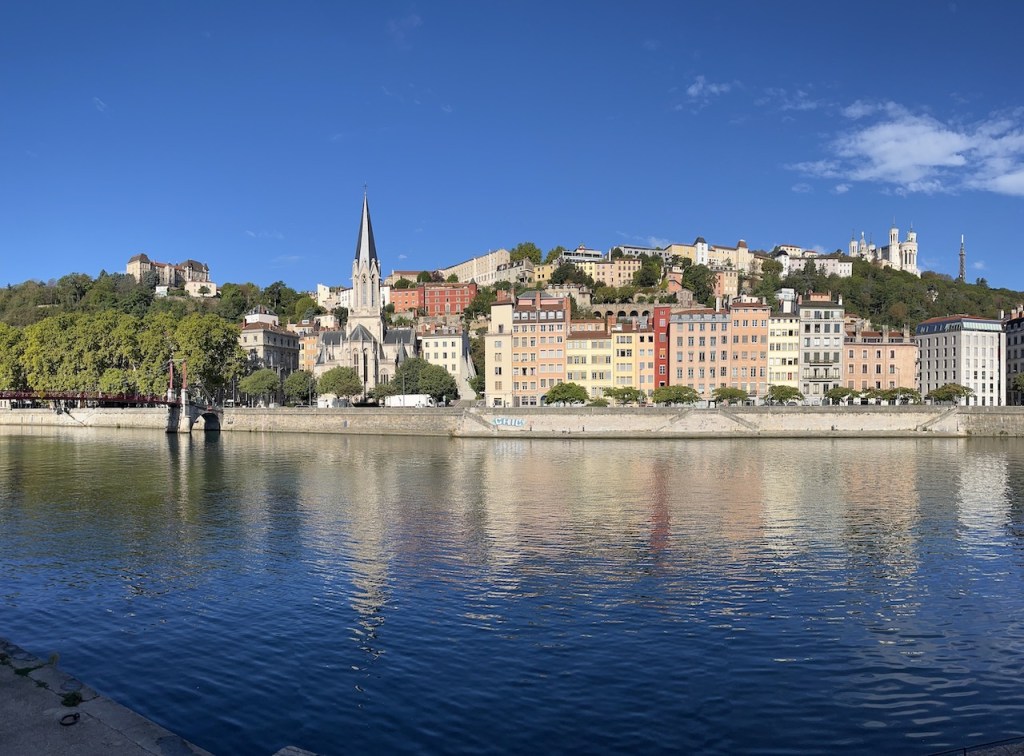
Lyon is a beautiful city. It is particularly beautiful now that the record heat of the first three weeks of September has abated somewhat, and one can stroll about without becoming too hot and sweaty. Situated on the steep hills surrounding the confluence of the Rhône and Saône rivers, its pastel-colored, multistory 17th, 18th, and 19th century buildings sparkle jewel-like in the golden light of autumn. The cooler weather is a welcome change for us!
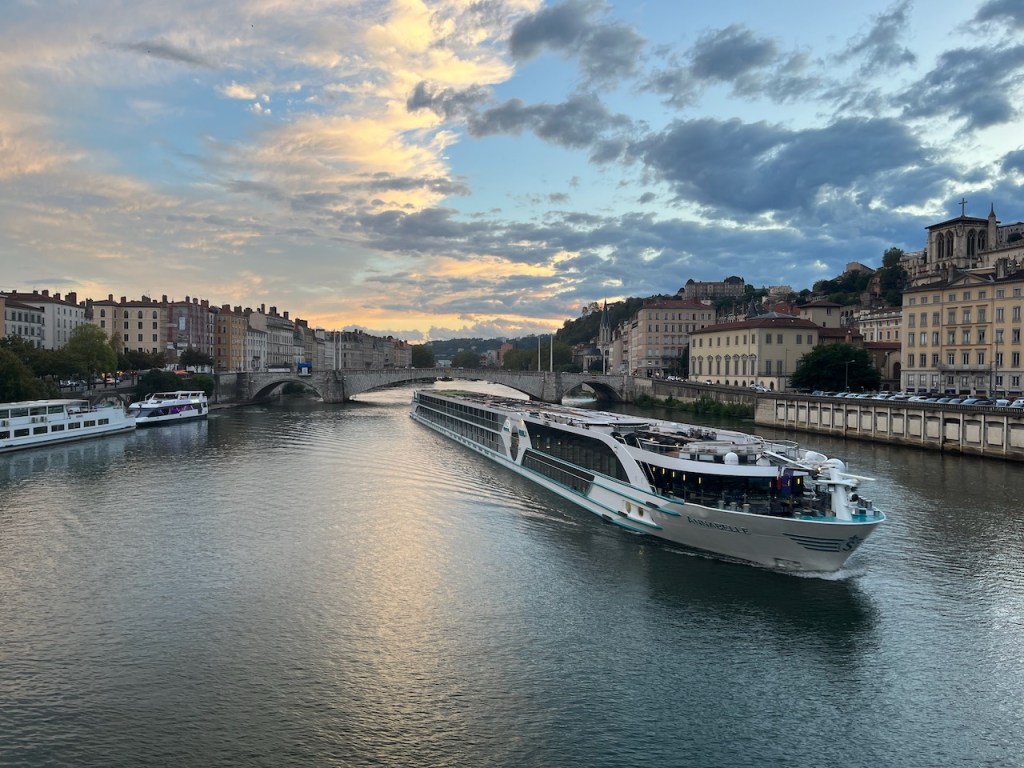
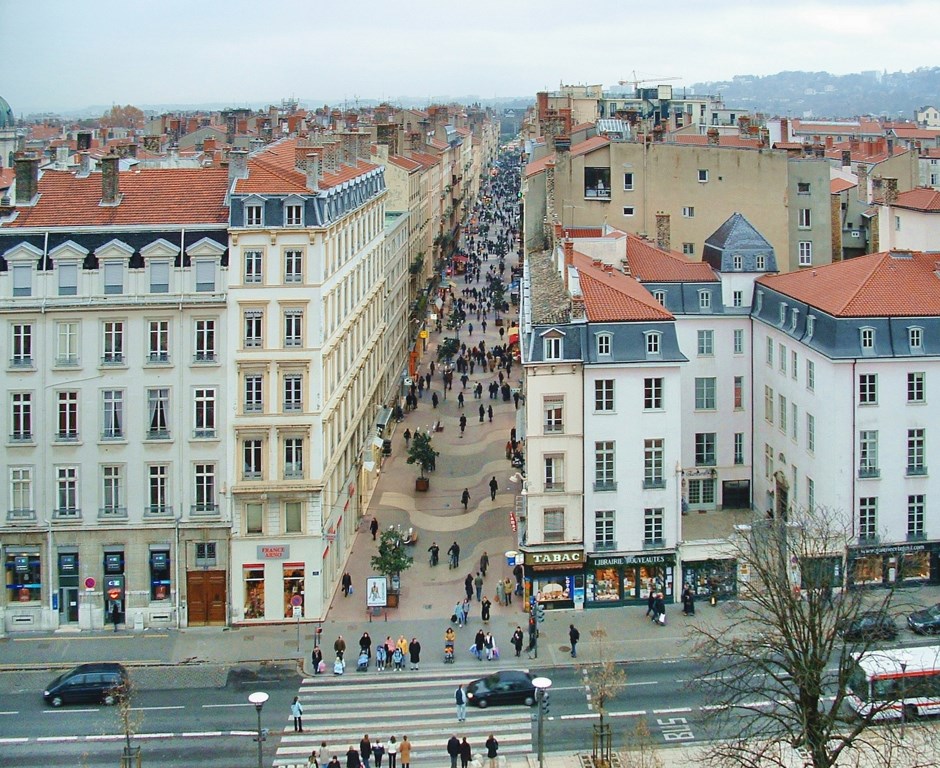
However, Lyon is a city that is not well-equipped for global warming. It grew haphazardly over a 2,000 year period when the weather was in general much cooler than it is today. In comparison to many of the cities of southern Europe, with their shady arcades and tree-line streets, it is a city that evolved to take as much advantage as possible of the sun’s energy, and its residents are now paying the price. Almost no residences have air conditioning, and very little shade. Most of the streets in the city center are narrow, tree-less canyons between 6-8 story apartment and office/store-front buildings. They are echo chambers for the noise of vehicles — particularly the ubiquitous motor scooters and motorbikes — and they concentrate the pollution and heat-island effect to the point where for almost four months of the year — June through September — living in Lyon is, shall we say, something less than pleasant. (For these reasons, anyone who can afford to do so leaves Lyon during the summer.)
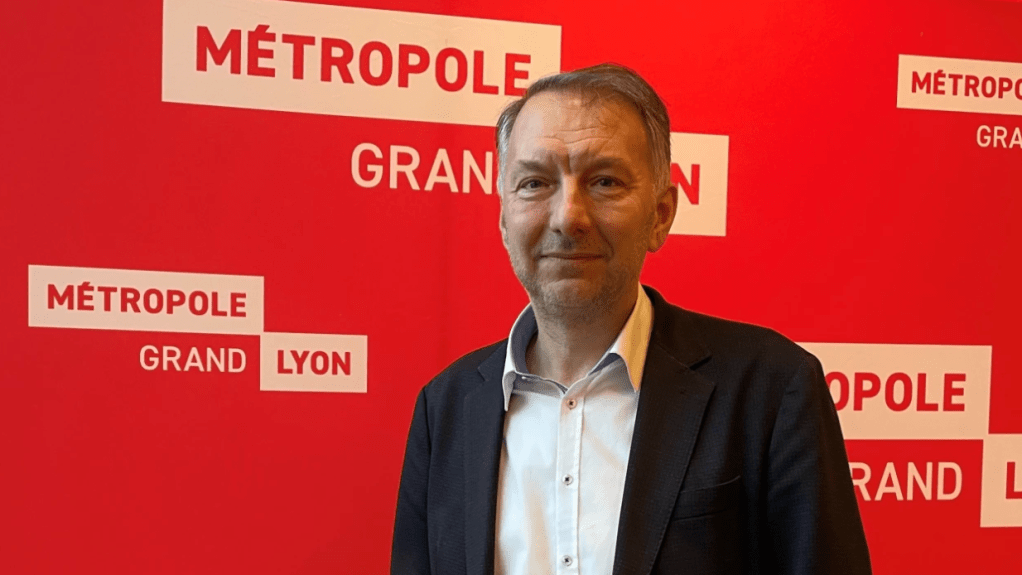
The government of the 59 cities that constitute the Metropolis of Lyon, known as “Grand Lyon”, is well aware of the need to make serious changes to the city structure. In contrast to, for example, the San Francisco Bay Area’s Association of Bay Area Governments (ABAG) and its 101 member cities, Grand Lyon has the power and budget (3.8 billion EUR / 4.0 billion USD for 2023) to really make a difference, and their projects are in full force throughout the region. The Metropolitan Council has been in the hands of a coalition of Green and left-wing parties since 2020, and the President of the Council, Bruno Bernard, a member of the Green party, is an activist in the best sense of the word.
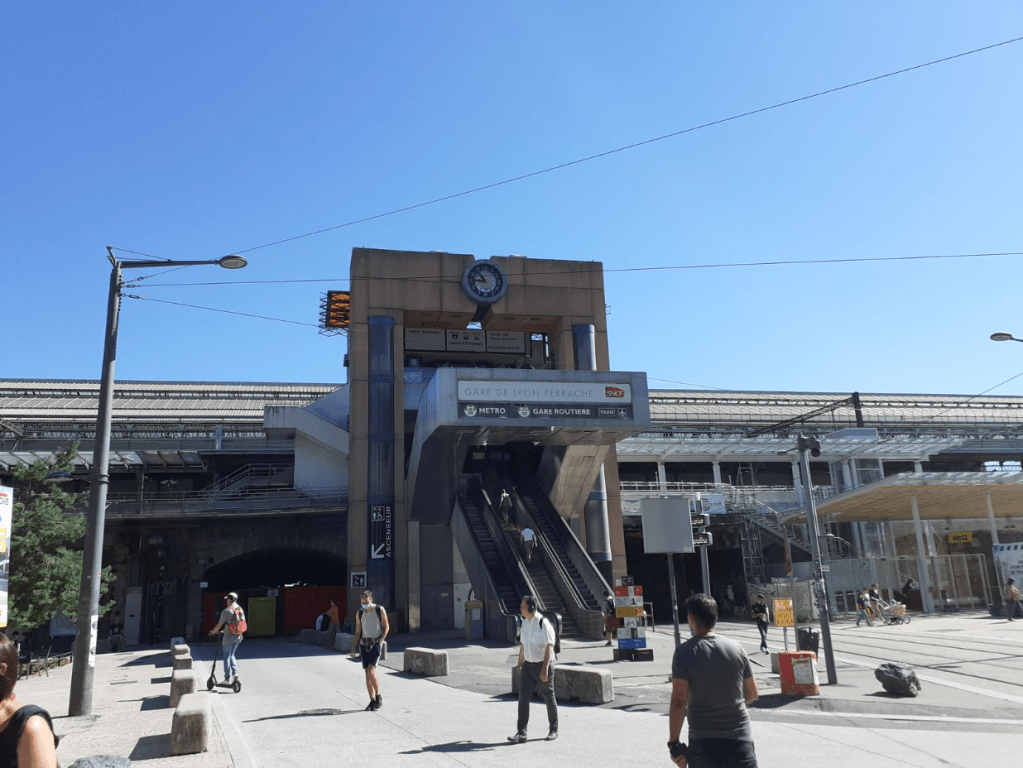
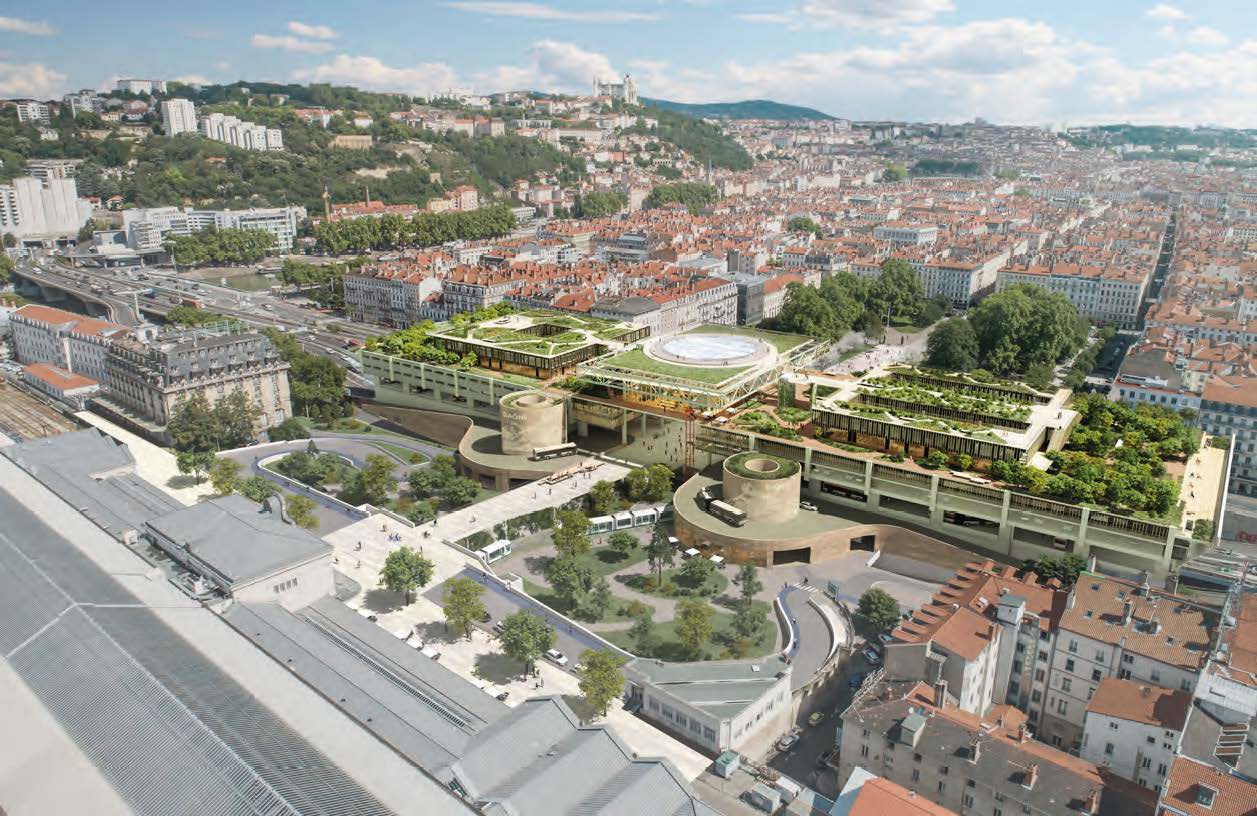
Throughout Greater Lyon, there are trees being planted, bike lanes being constructed, the extension of Metro lines, tramway (streetcar) lines, bus lines, the expansion of the central system of heat for buildings, new housing developments, the development of a smart electrical grid, replacement of water and sewer lines, and on and on. One of the biggest eyesores in the city is the enormous Perrache train station in the heart of Lyon, a “multi-modal” transportation hub that embodies the worst of the Brutalist architecture of the 1970s. By 2028 it will have an entirely new look:
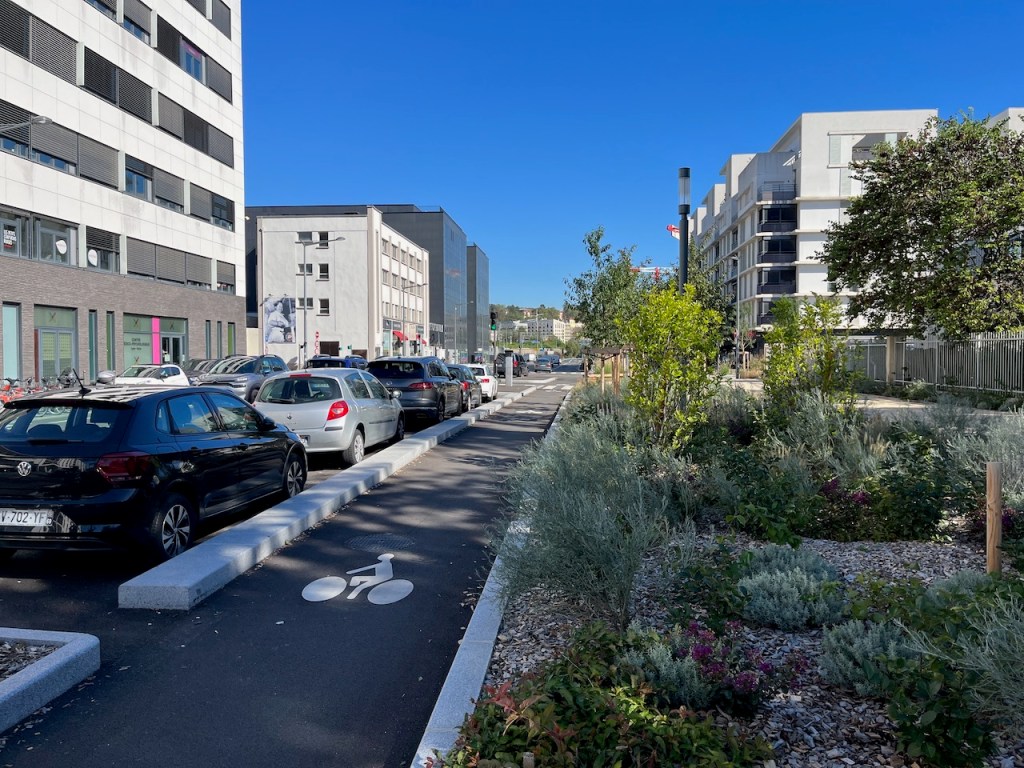
Over the past few months I’ve watched an example of these changes while on my usual bike ride out of the city and into the hills — les Monts d’Or — northwest of Lyon. My ride takes me along a quite busy road near the Vaise train station. In short order, Greater Lyon workers replaced two of the four lanes with dedicated bike lanes and new plantings of trees and drought-resistant plants. The result is fabulous!
We’ve had to go to the Lyon IKEA a few times. It’s located in an area of big box stores (“grandes surfaces”, in French) away from the center of town, near Lyon Bron airport, from where I’ve been flying light aircraft. Currently Greater Lyon is constructing lots of new apartment buildings, and they have been doing a beautiful job, with lovely walkways and parks between the buildings. I contrast this with the IKEA in East Palo Alto.
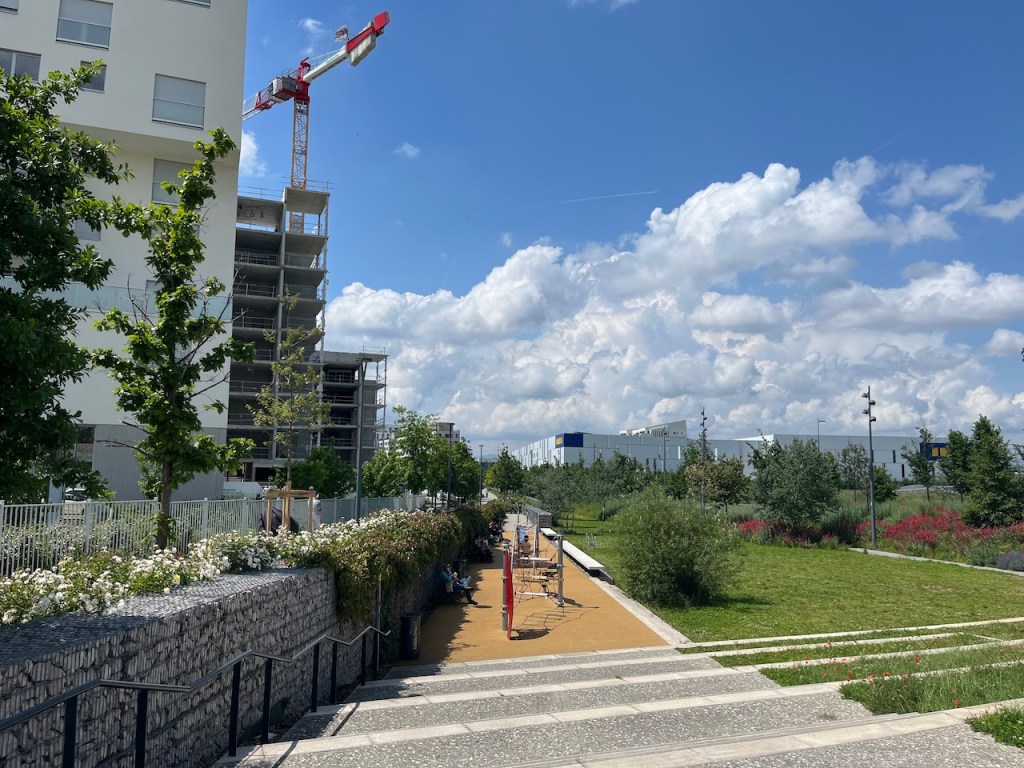
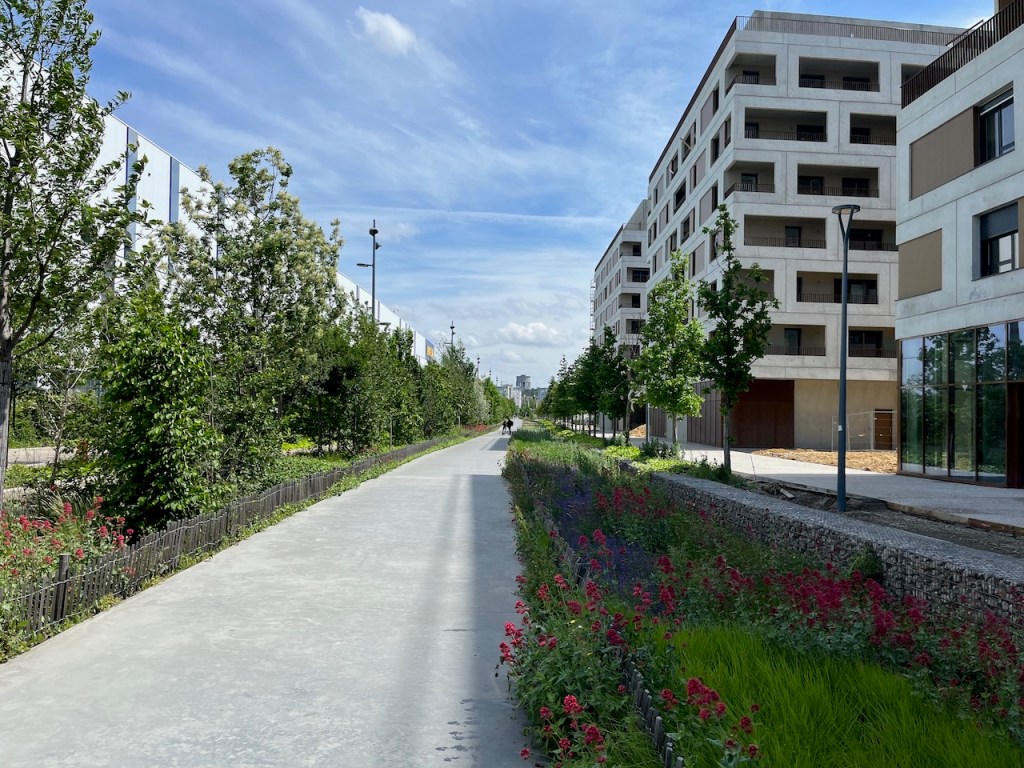
One question I have is whether or not these new apartments are air conditioned? My guess is not.
Yesterday French President Emmanuel Macron announced his ambitious plan to reduce France’s emissions to 55% of 1990 levels by 2030. (The average French carbon footprint is today approximately one third that of the average American.) Similar to US President Joe Biden’s plans, it involves more carrots than sticks, with government support of housing and transportation upgrades. It will be expensive, but less expensive than doing nothing and continuing on our current path.
 Barbara and Joe Abroad